


.jpg)
Goat Breeding Tips for Livestock Farmers (Urdu)
In order to get maximum meat and milk Beetal, Daira Deen Panah, Nachi, and Teddy Breeds.....

Mango Amazing Facts
The mango is known as the 'king of fruit' throughout the world. The name 'mango' is derived from the Tamil word 'mangkay' or 'man-gay'. When the Portuguese traders settled in Western India they adopted the name as 'manga'.

Pomegranate(Punica granatum) Cultivation and Farming
Pomegranates are fairly drought tolerant and can be grown on either calcareous or acid soils. Climate - Grow best in dry climates with mild winters. Chilling requirement

EU may also ban Monsanto GMO in wake of shocking cancer findings
Russia's consumer protection group, Rospotrebnadzor, said it was halting all imports of GM corn while the country's Institute of Nutrition will be evaluating the results of the study.

Protect Garden Pots during Winter
Many pots, especially ornamental containers that aren’t designed to stand outside in freezing temperatures, need winter protection. Wrap them up in burlap (possibly double layers), and secure tightly at the top and bottom with strong garden string.

Sustainable Agriculture and Fertilizers Practices in Pakistan
Agriculture is the mainstay of Pakistan’s economy. It has a total area of 79.61 million hectare, and the total area used for crop production is only 22 million ha.

Herbs For Winter Windowsill
Growing season is over, do you still find yourself ready to dash out to the garden for some chives, basil or a sprig of thyme...
.jpg)
Claim FREE EBook
Once you subscribe you will get a confirmation email from eagri about joining the mailing list.
Sunday, December 16, 2012
The Modern Face Of Farming In The UK
LPS Special Correspondent
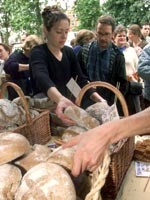
These pressures are generated by the modern world’s economic, environmental and consumer forces that have changed the face of the entire agriculture and food-production industry in the UK.
As a result, the UK’s agricultural and food production and processing technologies have become some of the most advanced and most sought-after in the world. The downside for many farmers is the personal consequences of the inevitable contraction of an industry that once employed millions but now supports a full-time workforce of fewer than 400,000 people.
Today in England, farmers tend an impressive 80% of the country’s 130,000 square kilometres of land and yet the direct economic value of farming in the food they produce is less than 1% of the nation’s gross domestic product.
This tiny proportion hides the real and immeasurable economic value of farming in terms of the raw materials that feed the UK’s major food processing industry, the new generations of energy crops for cleaner fuels, and the enormous benefit for the UK public in the shape of attractive landscapes that provide a fertile field for the growth industry of rural tourism – a sector that today is worth more in economic terms than farming.
Increasingly, these developments are being encouraged not only by government policies in the UK but also by the farming community. Modern farms are getting bigger but profits are dropping and farm incomes are at the lowest levels since the 1930s, while more than 40,000 jobs have been lost in farming in the past two years alone.
Many UK farmers are weathering the storm by becoming more productive. In the past 18 months the total area under crops has increased by 3% to nearly four million hectares, with wheat up by 20% at nearly 1.9 million hectares. At 21 million tonnes, the UK’s wheat and barley harvest marked a 17% increase over 2001.
Cheap grain from the Ukraine has contributed to a drop in grain prices for UK farmers but the UK’s National Farmers’ Union sees a confident future.
The overall wheat market looks promising for UK suppliers, reports a National Farmers’ Union spokesman. World production levels have fallen, especially in the United States, Canada and Australia, while new markets are opening up in north Africa and Asia.
Livestock, overshadowed today by UK’s grain and horticultural sectors, saw reductions of between 2- and 5% in dairy and beef breeding herds. Horticulture, by contrast, is a vibrant and growing feature of UK agriculture, with the UK leading the way internationally in research, development and environmental stewardship. Horticulture output today is worth almost two billion pounds sterling, more than 10% of the total industry.
Farming in UK also contributes strongly to a thriving export business in foodstuffs that rose to more than 4.8 billion pounds in the first six months of 2002 alone.
Defra - the government’s Department for the Environment, Food and Rural Affairs - is striving to help UK farmers survive and prosper, balancing the priorities of ensuring competitively priced food for UK and overseas markets with the need for high standards of safety, environmental care, animal welfare and a sustainable, efficient food chain – while maintaining the essential character of rural communities. Government forecasts point to a 9% growth in farming income this year.
Farmers are also contributing more effectively to government environmental schemes. Direct state ownership of production farms has long since ended but more than 25,000 farmers are now involved in government initiatives and in recent years 400 flourishing farmers’ markets have opened to offer producers scope to sell direct to their customers. Nearly 80,000 farmers and growers are members of farm assurance schemes.
The UK’s leisure and tourist industry, too, is presenting new opportunities for farmers. In the past 20 years an estimated 15,000 farmers have introduced products or services for the leisure market, from big pleasure and educational parks to small-scale facilities for holidaymakers.
Meanwhile the system of state support to food producers is under review with farmers, consumers and the government increasingly anxious to ensure Europe’s Common Agricultural Policy (CAP) develops as an integrated rural development policy.
Reforms to the policy get the support of UK farmers, although the industry is concerned that changes to the proposed phasing-in of farm support to new member states could affect farmers.
Farmers do not see any major competitive threat arising from the introduction of new member states into the European Union (EU), says the National Farmers’ Union. We broadly agree with the proposed EU position on agriculture in the enlargement talks.
Meanwhile another initiative for UK farmers to grasp is new scope for growing green fuels. Research shows almost one fifth of arable land could be devoted to crops for conversion into bio-fuels.
This promises to be one of the most dramatic shifts in the function of farming in recent history, says the National Farmers’ Union. It will provide new opportunities for farmers and will be excellent news for the environment. With such initiatives, UK agriculture is preparing to look ahead to a cleaner, productive and more stable future.
Source : http://www.agriworld.nl/

Promotion olive Cultivation for economic development in poverty alleviation
|
With high global demand and rising prices in the international market
and Pakistan’s annual edible oil import bill exceeding $2bn, the rationale of
recent olive cultivation initiatives in the country cannot be overemphasized.
Olive demand globally is on the rise. Germans are using five times more and
British ten times more olive than they did in 1990. In America, olive demand is
growing by 6pc annually for two decades now. Olive prices in world market have
doubled to $3,400 a ton recently. Pakistan has over 0.8mn hectares of wasteland
suitable for olive cultivation. An official of the now defunct Pakistan Oil
Seeds Development Board (PODB) had told this writer that by covering the area
with olive plants, Pakistan can produce around 1.84mn tons of olive oil. This
would fetch over $6bn at the current rate of olive in world market.
The Pakistan agricultural research council (PARC) has begun
implementing the project “Promotion of olive cultivation for economic
development and poverty alleviation” whereby olive plants will be cultivated on
300 hectares in Balochistan, 100 hectares in KP, 300 hectares in federally
administered tribal areas and 100 hectares in the Pothohar region of Punjab. The
Rs382mn project to be completed in three years is being under the Pakistan
Italian debt-for-development swap agreement.
|
 |
|
The Punjab Agriculture and Meat Company also plans to develop 10
certified nurseries. These nurseries –being opened through private sector in
Attock, Rawalpindi, Chakwal, Jehlum and Khushab districts –would have a
catchment area of 27000 acres and would have an impact of $78mn. The potential
area suitable for olive cultivation is around 8mn acres in Punjab of which 0.4mn
is being targeted though this initiative. Total impact of this land, if covered,
would be $1.16bn.
| |
Green Agriculture—The Next Hot Investment Sector?
 Judging by the turnout and interest, green agriculture just might be the next hot investment sector.

Eric Wesoff: March 25, 2010
It's a testament to the power of the greentech meme that more than 250 Silicon Valley types came out to learn about sustainable farming, water, GMOs, seeds and biodiversity. In the audience were investors from Mohr Davidow, Greylock, Kleiner Perkins, USVP, Redpoint, Rockport, Khosla Ventures, DFJ, Foundation Capital and many more.
It's possible that VCs can do for agriculture what they've done for online dog food delivery, grocery delivery, and gyroscopic scooters. That is, invest in a field they know nothing about, and totally jam it up.
According to KP's Deshpande, "At KP we try to be creative, asking how can we change that industry." Along those lines, he mentioned in vitro meat production. (See this article in Beef Magazine and check out the work of Jason Metheny.)
Issues that can be addressed by green ag investors include water, nitrogen, phosphorous, synthetic fertilizer, local foods, aquaculture, pests, and the move towards organics.


