


.jpg)
Goat Breeding Tips for Livestock Farmers (Urdu)
In order to get maximum meat and milk Beetal, Daira Deen Panah, Nachi, and Teddy Breeds.....

Mango Amazing Facts
The mango is known as the 'king of fruit' throughout the world. The name 'mango' is derived from the Tamil word 'mangkay' or 'man-gay'. When the Portuguese traders settled in Western India they adopted the name as 'manga'.

Pomegranate(Punica granatum) Cultivation and Farming
Pomegranates are fairly drought tolerant and can be grown on either calcareous or acid soils. Climate - Grow best in dry climates with mild winters. Chilling requirement

EU may also ban Monsanto GMO in wake of shocking cancer findings
Russia's consumer protection group, Rospotrebnadzor, said it was halting all imports of GM corn while the country's Institute of Nutrition will be evaluating the results of the study.

Protect Garden Pots during Winter
Many pots, especially ornamental containers that aren’t designed to stand outside in freezing temperatures, need winter protection. Wrap them up in burlap (possibly double layers), and secure tightly at the top and bottom with strong garden string.

Sustainable Agriculture and Fertilizers Practices in Pakistan
Agriculture is the mainstay of Pakistan’s economy. It has a total area of 79.61 million hectare, and the total area used for crop production is only 22 million ha.

Herbs For Winter Windowsill
Growing season is over, do you still find yourself ready to dash out to the garden for some chives, basil or a sprig of thyme...
.jpg)
Claim FREE EBook
Once you subscribe you will get a confirmation email from eagri about joining the mailing list.
Thursday, April 11, 2013
Stink Bugs Making Way Out of Hibernation
With all the news about the impending cicada brood emerging this year, Brown Marmorated Stinkbugs, last fall's significant pest, may have been overlooked.

"They are becoming active," said Weber. "What they're mostly doing in the warm weather is getting out [of their hibernating shelters] and finding food plants."
He said that scientists studying the bugs don't have firm population numbers, but said that adult bugs who managed to find proper shelter had a good shot at surviving the winter because temperatures weren't too severe.
"There were some rumors they were going to be a lot less abundant," said Weber. "It's pretty clear that's not true."
Historically BMSBs would hibernate in dead standing trees or on cliffs, but over time have adapted to civilization by making their way into homes in the fall, where they eventually emerge the next spring, according to Weber.
The bugs were first confirmed in Maryland in 2003, and are believed to have been brought to the United States from China as recently as the late 1990s, according to stopbmsb.org, a website created by scientists studying the insects. Since then, their population has exploded, especially in the Mid-Atlantic region, causing significant harm to crops and resulting in the Department of Argiculture labeling them the top invasive insect of interest in the country.
Weber said stinkbugs emerging from hibernation are now feeding on trees, shrubs and other woody plants, but will eventually shift to fruits and vegetables once those begin to grow.
Weber is currently working with an aggregation pheremone that male stinkbugs give off to attract other stinkbugs to a feeding area. Scientists create the pheremone chemically in a lab, which is then used in traps to catch the bugs. Eventually, said Weber, the work may lead to a commercial trap available for farmers and possibly homeowners.
"By the end of this year, things will be pretty clear where the private sector can step in and serve various stakeholders like growers and homeowners," said Weber.
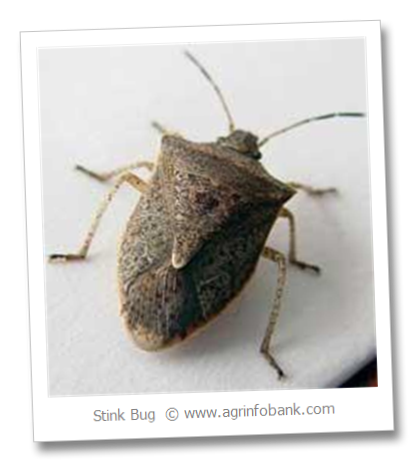
Currently, there are few options for homeowners inundated with stinkbugs, other than squishing or trapping the bugs, which aren't poisonous and don't bite, but do give off a cilantro-like smell when frightened.
Weber said through his research he has noticed that the bugs tend to congregate in outer suburbs, such as Carroll County, where there is both abundant vegetation in the form of farmland and woods, as well as nearby housing.
"Inside the beltway, it's spotty," said Weber. "There's not that expansive number of host plants where they can build up their population."
Weber said scientists studying the bugs may have solid population numbers on them by the end of the year. A network of university entomologists in states where the stinkbugs are abundant estimated their population figures in 2012 using traps, but this year will be able to test the accuracy of those numbers with another year of estimates, according to Weber.
"We have an aggregation pheremone that is very effective during the growing season at attracting them," said Weber. "That will give us an idea of their numbers."
But will there be a great insect war between the now-ubiquitous stinkbugs and the emerging cicads?
"There's no interaction between the two," said Weber. "Other than people getting a little tired of both of them."
Source:http://eldersburg.patch.com


