


.jpg)
Goat Breeding Tips for Livestock Farmers (Urdu)
In order to get maximum meat and milk Beetal, Daira Deen Panah, Nachi, and Teddy Breeds.....

Mango Amazing Facts
The mango is known as the 'king of fruit' throughout the world. The name 'mango' is derived from the Tamil word 'mangkay' or 'man-gay'. When the Portuguese traders settled in Western India they adopted the name as 'manga'.

Pomegranate(Punica granatum) Cultivation and Farming
Pomegranates are fairly drought tolerant and can be grown on either calcareous or acid soils. Climate - Grow best in dry climates with mild winters. Chilling requirement

EU may also ban Monsanto GMO in wake of shocking cancer findings
Russia's consumer protection group, Rospotrebnadzor, said it was halting all imports of GM corn while the country's Institute of Nutrition will be evaluating the results of the study.

Protect Garden Pots during Winter
Many pots, especially ornamental containers that aren’t designed to stand outside in freezing temperatures, need winter protection. Wrap them up in burlap (possibly double layers), and secure tightly at the top and bottom with strong garden string.

Sustainable Agriculture and Fertilizers Practices in Pakistan
Agriculture is the mainstay of Pakistan’s economy. It has a total area of 79.61 million hectare, and the total area used for crop production is only 22 million ha.

Herbs For Winter Windowsill
Growing season is over, do you still find yourself ready to dash out to the garden for some chives, basil or a sprig of thyme...
.jpg)
Claim FREE EBook
Once you subscribe you will get a confirmation email from eagri about joining the mailing list.
Friday, April 19, 2013
Upping your nutrition quota
If aesthetics aren’t a good enough reason to grow herbs, consider the fact that many herbs are good for you, too. According 
A few culinary herbs have recently made the news because of their antioxidant levels. Antioxidantsare chemicals contained in plants that are thought to play a role in preventing some forms of cancer, as well as in helping to slow the aging process. In one study researchers tested the antioxidant levels of a variety of herbs and found the highest levels in oregano, sage, peppermint, and thyme. They concluded that herbs are an important source of dietary antioxidants, right up there with red wine and green tea.

Wednesday, April 17, 2013
Mealybug: Biology and control
Vaughn M. Walton
ARC Infruitec-Nietvoorbij, Stellenbosch
Mealybug (Planococcus ficus) is one of the key pests affecting vines in South Africa. The last two seasons favourable climatic conditions urged viticulturists to focus on this pest once more. To control the mealybug successfully, a thorough knowledge of the insect’s biology is required. In this article an attempt is made to shed light on the biology of mealybug and possible control strategies will be recommended.
Biology and Life cycle The rate of development of mealybug is directly dependent on environmental temperature. Eggs are laid in egg-sacs consisting of a mass of wax threads. Crawlers hatch after 7-10 days at an average temperature of 25°C (Fig.1).

Crawlers cast their skins to become 2nd and 3rd instar larvae (nymphs), while third instar larvae cast their skins to become adult females. After mating, the egg-sac develops and the female starts laying up to 750 eggs at a time. Damage is only caused by the female mealybug. She is more visible than the male, since the latter only lives between one and three days. The female feeds with sucking mouthparts and nutrients are extracted from the plant, while honeydew is excreted.
The male mealybug causes no damage as it has no feeding mouthparts. The only difference between the lifecycle of the two sexes is that in the case of the male, second instar larvae spin a cocoon in which the third instar larvae, pre-pupae and pupae develop. Adult winged males then appear from the cocoon. In summer mealybugs can complete their lifecycle in 3 to 4 weeks, causing populations to develop rapidly under favourable conditions.
Seasonal occurrence
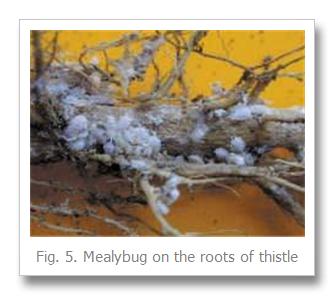
In winter mealybugs hide beneath loose bark and in cracks on the trunks of vines (Whitehead, 1957). It was recently found that mealybug can also hibernate on vine roots (Fig. 2) and weeds (Fig. 5).

In winter they continue to feed on vine sap and lay eggs. Due to the low environmental temperature the lifecycle is very slow. As soon as temperatures start rising in spring and early summer, crawlers emerge from below the bark and cracks in search of the new growth with its higher nutrient concentrations. Crawlers settle on new leaf and shoot growth where they develop, mate and multiply. In January/February these populations are at their highest. Mealybugs then move to the bunches where the nutrients are increasing. Here they feed mainly on the bunch and berry stems. In late summer and autumn nutrients start moving to the roots from the leaves and stems (Conradie, 1985) and the downward migration of mealybugs takes place once again.

Symptoms and possible damage

High infestations may result in desiccation of bunches, making them totally unmarketable (Fig. 4).
Repeated serious infestations can cause individual vines to die. Furthermore, while early shedding of leaves can cause sunburn damage to grapes, mealybug is also a vector of leafroll virus.
Integrated control
With integrated control, chemical, biological and cultivation methods are used in conjunction with each other. Each method contributes to the total control strategy. In an integrated programme various aspects should be considered to ensure an environmentally friendly, yet effective end result.
Integrated mealybug control may be implemented in the planning phase, even before planting. Factors that could play a role are cultivar differences and macro- as well as micro-climatic conditions.
Certain cultivars are more susceptible to mealybug than others and are indicated in Table 1 (Le Roux, 1996).
Before planting a new vineyard, the history of mealybug infestation in the area should be ascertained, especially if one of the more susceptible cultivars is being considered. If high average temperatures occur in a specific area, there is a bigger chance of mealybug problems. Favourable micro-climates, e.g. slopes that get excessive northerly sun, may also occur in certain blocks and encourage mealybug infestation.
a) Monitoring
It is of the utmost importance that a vineyard which is regularly plagued by mealybug should be monitored for the pest early in the season. By regular monitoring, the development of a problem may be predicted and possible control strategies implemented. An early indication of mealybug is the presence of ants. Certain weeds (as indicated below) have roots that may be checked for the presence of mealybug. These observations may serve as early warning signs. At least twenty vines, evenly distributed over a block of one hectare, must be monitored. Later in the season mealybug infested vines are more visible – they are covered in honeydew and sooty mildew and ants are usually present. In the late summer early shedding of leaves and desiccated bunches are further symptoms. In winter sooty mildew and sometimes even ants are already visible on infested vines. Infested vines should be marked throughout the season, in the course of pruning and vine preparation and also during harvesting. Vines that are marked make it easier to control mealybug accurately and effectively. Once monitoring has been done, a decision can be taken as to which control strategy should be followed.
b) Weed control
Before considering any other means of control, the first step is to control weeds. During the past season it was found that various weeds may serve as hosts for mealybug.
Mealybug occurs on the roots of the following weeds (For illustrations of weeds refer to Fourie et al., 1996) :
- Common blackjack (Bidens pilosa)
- Khaki weed (Tagetes minuta)
- Small mallow (Malva parviflora)
- Flax-leaf fleabane (Conyza bonariensis)
- Black nightshade (Solanum nigrum)
- Thornapple (Datura stramonium)
- Sowthistle (Sonchus oleraceus)
- Musk Herons Bill (Erodium moshantum)
- White goosefoot (Chenopodium album)
A correlation has been found between the occurrence of these weeds and mealybug problems in vines. The best method of control is the planting of cover crops as recommended by Fourie et al. (1997). Long flowering cover crops that do not host mealybug may reduce ant problems, may help to reduce the forming of dust, may serve as supplementary nutrition for natural enemies and may bind nitrogen. Weeds may also be controlled physically (shrub beaters) and chemically (herbicides) (Fourie et al., 1996). Weeds have to be controlled from early in the season, since they act as access routes to the vine for ants and do not contribute much to the quality of the soil. Ant control is impossible if weeds grow into the vines.
c) Ant control
Effective ant control is a prerequisite for mealybug control since ants protect mealybug against its natural enemies. Ueckermann (1998) found the most effective means of ant control to be circular spraying around the trunk. This method of control is also more environmentally friendly than chemical treatments on the soil. The purpose of this application method is to keep ants out of the vines, but still allow them on the soil surface. Here ants may act as predators of beetle, fruit fly and moth larvae and pupae. At the moment chlorpyrifos EC is the only registered pesticide against ants (Nel et al., 1999). Chlorpyrifos has also been tested at 41ml/L (not a registered concentration) with reasonably good results (Ueckermann, 1998). Trunk treatments for ants should be dependent on ant activity. Usually ants become more active from October onwards if mealybug is present.
d) Natural enemies and biological control
Natural enemies can only impact on mealybug control if prior practices have been implemented. There is worldwide resistance to the use of insecticides. South African wine farmers therefore have to limit the use of chemical products to the absolute minimum. In future the role of natural enemies will consequently increase. Research indicates that if integrated control is applied correctly, these natural enemies can control mealybug successfully. For this reason it is essential to recognise natural enemies in the vineyard and surroundings before considering the use of chemical products.
The most common natural enemies of mealybug include the parasitic wasp which plays an important role in most vineyards. The most important parasitic wasps are Anagyrus sp. (Fig. 6A), Leptomastix dactylopii (Fig. 6B), and Coccidoxenoides peregrinus (Fig.6C).

These insects eliminate mealybug populations by laying their eggs in the host. The parasite eggs develop in the body cavity of the mealybug. The host is eventually killed when the parasite engulfs the body cavity and hatches. Coccidoxenoides peregrinus is being bred on a large scale at Nietvoorbij and is then set free in trial blocks. Results obtained over the past two seasons are very promising and in future C. peregrinus can possibly be bred co-operatively and released to control mealybug. However, it is sometimes difficult to determine whether these insects are indeed present in vineyards. It is possible, nevertheless, to notice mummies of parasitised mealybug with the naked eye (Fig. 7).
Predatory beetles also occur in vineyards early in the season. The most dominant beetles include Nephus quadrivittatus (Fig. 6D) and Nephus bineavatus (Fig. 6E). These beetles eat various stages of mealybug.
d) Chemical control
This method of control should be seen as the last resort for mealybug control, since no insecticides are environmentally friendly. The substances mentioned below are organophosphates that are poisonous to people, cattle, birds, fish, natural enemies and bees. Since mealybug occurs in random spots in vineyards, an attempt should be made to give spot treatments in order to reduce the impact on the ecosystem.
Certain products are only applied in the growing season, while others are used both in winter and the growing season. Dosages (per 100l water) also differ, depending on the growth stage. Dormant treatments (before the new growth begins) should only be applied if more than 5% infestation occurs. This reduces hibernating mealybug populations to such an extent that natural enemies can control mealybug effectively the next season. Routine dormant spraying should be avoided. Try to spray only the vine that has been marked and the two vines on either side with hand-held spray guns and a high pressure pump. Atomiser sprays do not give sufficient coverage. The following chemical products and application methods are still being used at present (Nel et al., 1999; Vermeulen, 1999):
- 1.Chlorpyrifos EC (480g/l) at 200ml/100l is recommended twice, 14 days apart, prior to budding. After budding there are problems with phytotoxicity on young shoots and leaves. Chlorpyrifos at this dosage also suppresses the Argentine and Cocktail ant.
- 2.Profenofos EC (500g/l) at 100ml/100l is also recommended twice,14 days apart, prior to budding. Thorough drenching is required.
- 3.Protiofos EC (960 g/l) at 50ml/100l is recommended once before budswell. A safety period of 100 days must be maintained, however.
During the growing season the following chemical products and application methods are allowed (Nel et al., 1999; Vermeulen, 1999):
- 1.Chlorpyrifos EC (480g/l) is recommended at 75ml/100l from four weeks after budding up to 28 days before the harvest. Take note of the dosage, higher dosages will result in phytotoxicity on leaves.
- 2.Dichlorvos EC (1000g/l) is recommended at 75 ml/100l up to 7 days before harvest. This treatment is only supplementary to winter treatments.
- 3.Dimethoate EC (400g/l) is recommended at 125ml/100l up to 28 days before harvest.
- 4.Formothion EC (250g/l, 330g/l) is recommended at 150ml/100l up to 10 days before harvest.
- 5.Methidathion EC (420g/l) is recommended at 50ml/100l up to 8 days before harvest. This treatment is prescribed as a late corrective one-off treatment.
- 6.Mevinphos SL (500g/l) is recommended from 37,5-45 ml/100l up to 7 days before harvest.
e) Post-harvest spraying
Post-harvest spraying is not recommended, since this is the period when the populations of natural enemies, which are a lot more susceptible to insecticides than mealybug, are at their highest. Spraying at this stage interferes with biological control for the next season. If vines deteriorate, and early shedding of leaves occurs, the infested vines only can be sprayed.
f) Further guidelines
If a decision to use chemical control is taken, the following guidelines may be followed in order to interfere as little as possible with biological control of mealybug:

Apply the minimum amount of chemical products per season. If full cover has to be achieved with spraying, products that degrade rapidly (withdrawal period of 7-10 days) are recommended. In old vines loose bark around the main trunk and neck may be removed so that penetration of the insecticide will be more effective and more mealybugs killed. For ant and snoutbeetle control, synthetic pyretroids are recommended for trunk spraying instead of soil or full cover spraying. With monitoring and correct application no more than two trunk sprays per season are required. With snoutbeetle control, full cover spray with synthetic pyretroids (withdrawal periods of 28 days and longer) should be avoided. Rather apply fruit fly bait droplets than a full cover spray. Chemical control for budmite should only be applied if bud analysis at the time of pruning indicate this to be necessary.
Planting suitable cover crops has several advantages. It limits dust forming, which decreases natural enemies efficiently. It provides certain natural enemies with alternative nutrition and shelter. It benefits weed control and improves soil quality. Attempt to establish cover crops that flower early and for a long time during the season, thereby giving natural enemies an early advantage in the season.
In conclusion
Mealybug remains one of the key pests in the viticultural industry. To address this problem, five projects are currently registered with ARC Infruitec-Nietvoorbij, viz.:
- Mass breeding of natural enemies of mealybug
- Integrated control of mealybug in vineyards
- Bio-testing of insecticides on natural enemies of mealybug
- Determination of life-span tables of mealybug and an important natural enemy
- Determination of the economic threshold values of mealybug
With these projects an attempt is being made to develop effective and environmentally friendly control strategies against mealybug.
Further queries about mealybug or its natural enemies may be addressed to Vaughn Walton at Tel.: 021 809 3167, Fax: 021 809 3002, or e-mail: vaughn@nietvoor.agric.za.
Literature references
Annecke, D.P. & Moran, V.C. 1982. Insects and mites of cultivated plants in South Africa. Butterworths, Durban/Pretoria.
Conradie W.J. 1985. Nitrogen nutrition of the grapevine (Vitis vinifera spp.). Ph.D., University of Stellenbosch.
Fourie, J.C. 1996. Uitkenning en chemiese beheer van belangrike onkruide in Wingerde van Suid-Afrika. Nooitgedacht Pers, Kaapstad.
Fourie, J.C., Louw, P.J.E., & Agenbach, G.A. 1997. The effect of different cover crop species and cover crop management practices on the available N and N-status of young Sauvignon blanc vines on a sandy soil in Lutzville. Abstract, South African Society for Enology and Viticulture Congress, 27-28 November 1997, Cape Town.
Le Roux, P. 1996. Die chemiese beheer van wingerdwitluis, in Wingerdwitluis paneelbespreking, SAWWV – Kongres, Kaapstad, 8 November 1996.
Nel, A., Krause, M., Ramautar, N. & Van Zyl, K. 1999. A guide to the control of plant pests. Directorate: Agricultural Production Input, National Department of Agriculture, Republic of South Africa.
Prinsloo, G.L. 1984. An illustrated guide to the parasitic wasps associated with citrus pests in the Republic of South Africa. Department of Agriculture Science bulletin, No. 402.
Ueckermann, P. 1998. Ant control in vineyards. Wynboer Tegnies 105: 8-9.
Vermeulen, A.K. 1999. A Guide to the use of Registered Fungicides and Pesticides against Grapevine Diseases and Pests: Wine Grapes. ARC-Fruit Vine and Wine Research Institute, Private Bag X5026, Stellenbosch, 7599, South Africa.
Whitehead, V.B. 1957. A study of the predators and parasites of Planococcus citri (Risso) (Homoptera) on vines in the Western Cape Province, South Africa. M.Sc. thesis, Rhodes University, Grahamstown, South Africa.
Source: http://www.wynboer.co.za
Tuesday, April 16, 2013
NEEM OIL FOR PESTS
It seems like no matter what time of the year, insects abound, but there is a great organic solution available to keeping bugs in check. 
The neem tree, which has insecticidal properties and is native to India and Africa, produces seeds that have been used to repel insects and pests in stored grains and in gardens and homes for years.
Today, the extract of the neem tree seed is the active ingredient in Neem-Away Insect Spray. Neem-Away suppresses an insect’s desire to feed and disrupts its hormonal balance so it dies before molting.
Field tests have shown Neem-Away to be effective against a wide range of insects from aphids and caterpillars to corn borer and squash bugs. Neem-Away will not harm beneficial insects such as lady beetles and lacewing.
Neem oil can be used on a broad range of insects on vegetables, fruits and nuts, flowers, trees and shrubs.
Apply when pests first appear to prevent damage. Repeat every 7-10 days as needed; regular spraying increases its effectiveness.
Source: http://www.weekendgardener.net
LEAFMINERS: Biology and Control
LEAFMINERS
(Agromyzidae)
Leafminers tunnel within leaves, giving foliage an unattractive appearance. In addition to a cosmetic problem, leafminers can also damage beets, chard, and columbine.
DESCRIPTION

LIFE CYCLE
Adults emerge from overwintering cocoons in early spring and lay their eggs side by side in clusters on the undersides of leaves. The larvae mine leaves for 1 to 3 weeks, then pupate for 2 to 4 weeks inside the leaf or they can drop to the soil to pupate. There are normally 2 to 3 generations per year; more in greenhouses.
PLANTS MOST AFFECTED
Bean, beet, cabbage, chard, lettuce, pepper, tomato, and many other vegetables. They also attack many ornamentals, especially chrysanthemum and nasturtium.
DAMAGE
Larvae tunnel through the leaf tissue, making hollowed-out, curved, or winding mines. Larval damage can kill seedling plants by removing chlorophyll and reducing the plants photosynthetic capacity. Mines and feeding punctures also produce an entrance for pathogenic organisms. Excessive leaf mining in older plants can cause leaves to dry, resulting in sunburning of fruit and reduction in yield and quality. In severe infestations, leafmining may cause plant death.
LEAFMINER CONTROL
Prevention:
1. Cover seedlings with Floating Row Covers
2. Remove any nearby dock or lamb's-quarters because they are natural hosts for beet leafminers.
Control:
1. Handpick and destroy any mined leaves.
2. Remove any egg clusters as soon as they are visible.
3. Spray Neem Oil.
Source:http://www.weekendgardener.net
Monday, April 15, 2013
Cherry Nutrition Facts
A bowl full of sweet cherries is brimming with health benefits. Cherries are naturally low in fat and calories and free of both cholesterol and sodium. They are also a good source of dietary fiber, vitamin C, potassium and contain boron.
Facts
- The word 'cherry' comes from the French word ‘cerise,’ which in turn comes from the Latin words cerasum and Cerasus, the classical name of the modern city Giresun in Turkey.
- It is believed that the sweet cherry originated in the area between the Black and Caspian Seas in Asia Minor around 70 B.C. The Romans introduced them to Britain in the first century A.D.
- Cherries are drupes, or stone fruits, and are related to plums, peaches and nectarines.
- There are 430 species in the genus Prunus which include cherries, plums, peaches, apricots and almonds - just to name a few.
- The English colonists brought cherries to North America in the 1600’s.
- There are more than 1,000 varieties of cherries in the United States, but fewer than 10 are produced commercially.
- On average, there are about 44 cherries in one pound.
- In an average crop year, a sweet cherry tree will produce 800 cherries.
- Seventy percent of the cherries produced in the United States are grown in the Northwest.
- Stemilt Growers is the world’s largest shipper of sweet cherries.
- While they have long been a popular dessert fruit, cherries were used for their medicinal purposes in the 15th and 16th centuries.
- Researchers first found that eating cherries may help relieve gout and arthritis attacks back in 1950 during a preliminary study of daily cherry consumption.
- Anthocyanids give cherries their red color.
- The world's heaviest cherry was grown by Gerardo Maggipinto (Italy) and weighed 21.69 g (0.76 oz) on June 21, 2003. The cherry was presented at La Grande Ciliegia, in Sammichele di Bari, Italy.
Fiber: One cup of cherries contains 3 grams of dietary fiber, an essential ingredient in a healthy diet. Adults should consume between 20 and 30 grams of fiber each day. Research suggests that a high-fiber diet can prevent constipation, lower the risk for developing digestive disorders, lower cholesterol, control blood sugar and aid in weight loss.
Potassium: Cherries are a good source of the nutrient potassium, with approximately 260 milligrams in a one cup serving. The recommended daily dose of potassium for adults is 3,400 milligrams. Potassium is a main electrolyte that keeps the body functioning properly and plays an important role in muscle, heart, kidney and nerve cell functions. It also works with another electrolyte, sodium, to balance water levels throughout the body.
Vitamin C: One serving of cherries has 16% of the recommended daily dose of vitamin C, a water-soluble vitamin that is essential to keep the body functioning normally and maintain a healthy immune system. Vitamin C is also a highly effective antioxidant, which means it may help prevent the onset of several chronic diseases.
Boron: Cherries also contain boron, a mineral that helps maintain calcium balance and promotes bone health. Some research suggests that boron may play a role in preventing osteoporosis, a disease in which bones become fragile and more likely to break. The level of boron needed in the diet is not known, but many nutritionists suggest consuming between 3 and 5 milligrams of boron each day. In addition to sweet cherries, boron is found in many other common fruits, leafy vegetables and legumes.
Cherry Nutrition Facts
Cherries are certainly one of today’s most popular dessert fruits, but they have been recognized for their medicinal purposes since the 1400’s. One cup of sweet cherries has just 90 calories and is a good source of fiber and vitamin C. With these great attributes, it’s no wonder why many nutritionists, dietitians, and other health professionals often refer to cherries as a superfood. Read on to learn about the many “super-powers” of cherries:

Did you know that cherries rank among the top 20 foods with the highest concentration of antioxidants. In fact, the standard one-cup serving of cherries has the capacity to carry 4,873 antioxidants! Antioxidants are substances found in foods that may protect cells from damage caused by unstable molecules, known as free radicals. Cherries are especially rich in a phytochemical called anthocyanin. They also contain melatonin, phenols and quercetin.
Cherries and Melatonin:
There are many instances in life when your sleep patterns are disrupted. Whether it is expected jet lag or an ongoing sleep disorder, fresh cherries and the melatonin they contain can be an ally for you! Melatonin is a naturally occurring hormone produced by the pineal gland in the brain. It plays a key role in regulating the body’s internal clock and helps determine when we fall asleep and when we wake up. Eating a handful of cherries just before bed is a great way to naturally regulate your sleep cycle.

Great news for arthritis sufferers! A bowl full of cherries may help alleviate pain and inflammation associated with arthritis and gout, the most severe form of arthritis. A gout attack occurs when excessive amounts of uric acid (waste product found in the blood) accumulate in the joints, and cause inflammation and pain.
Back in 2004, researchers from the Agriculture Research Service and University of California-Davis teamed up to study the effects consuming cherries could have on reducing pains caused by gout. They found that participants who ate 45 sweet cherries during breakfast significantly decreased their blood plasma levels while simultaneously increasing the amount of uric acid removed through urine. According to the researchers, these two changes are signs of a healthy immune system fighting inflammation.

Cardiovascular disease, or heart disease, is the single leading cause of death in America. One of the many health benefits of cherries is that they contain powerful antioxidants called anthocyanins, which may reduce a person’s risk of developing cardiovascular disease.
Just like red wine, anthocyanins give cherries their deep red color and also protect cells from damage during an interaction with oxygen. This important process also serves to protect the heart and surrounding tissue, inhibit plaque formation and reduce inflammation.
Cherries and Brain Health:
Cherries are one of the few foods that contain melatonin. In addition to helping regulate sleep patterns, melatonin is an important antioxidant that helps maintain optimum brain functioning and may deter the onset of age-related chronic diseases like Alzheimer’s. Research also suggests that the anthocyanins found in cherries further protect neural cells and promote brain health.
Source: stemilt.com
Chili Peppers for Beginners
By Julian Livsey
This guide is for anyone who has somehow hit on the idea that it would be fun to grow chile peppers. You haven't grown them before, perhaps you haven't really grown anything before. After a bit of research on the internet you are completely overwhelmed by the advice and information; not sure where to begin. thechileman website is not aimed at the prefessional growers, yet when we start talking in the guides about vermiculite and heated propagators it may make you wonder whether growing chile peppers is for you afterall. Well don't be put off, there is an easier way! Yes we like pre-germinating our seeds. We like heat mats, and the drainage advantage of perlite in our soil mix but you don't have to do all that. Chile plants can be stunningly easy to grow. So here is thechileman's guide for first time growers or those who don't want to bother with anything complicated...

Seeds
To grow your own chile peppers you first need seeds. There are lots of fantastic varieties of peppers available to choose from. But for the complete beginner who wants garanteed chile pods and doesn't want to wait too long to get them, the usually shorter growing time of the Capsicum Annuum's are probably a good choice, particularly for anyone growing in a cooler climate. You can buy seeds from your local garden centre or take a look at our pod pals section for some recommended seed suppliers. But if you prefer, it really is as simple as popping down to your local supermarket, buying a couple of peppers and scraping out the seeds.
Germination.


It doesn't matter what you use to hold your soil. Whether it is a propagator or a simple plastic box with some small drainage holes cut into the bottom of it to stop the soil getting water logged. Sow your seeds by placing them on the surface of the soil, then cover them over with more soil but only so that they are just below the surface, perhaps as little as three milimeters. Seeds only have so much energy stored before they need to generate more from light, so plant them too deep and they will run out of energy before they reach the surface.
To get moisture to the seeds you need to water the surface of the soil. Not too much, you want the soil to be moist, not water logged. The final ingredient is heat. At this stage there is no requirement for light so you may find something like an airing cupboard is ideal. Above a radiator, anywhere reasonably warm will do. But bear in mind you don't want to bake them, and also that too much heat will reduce the moisture content of your soil.
Sucessful germination
Depending upon the variety that you are growing, your seeds will take anywhere from a few days to several weeks to break the surface. You need to be patient but you will be rewarded when they push their way through the surface. While they are seedlings your plants are very sensitive and delicate so best not to touch them. Heat and moisture are still important but key now is the amount of light your seedlings receive. Place your plants in a south facing window or a warm greenhouse if you can.
Transplanting
Chile plants generally produce sets of leaves in pairs. The first set are called the seed leaves, the next set will be the first true set of leaves. Once your seedlings have these you will need to move them to a larger pot to give them more room to grow. Plant pots are cheap and easy to find. It doesn't matter what size you use, but most people would start off with one about four inches in diameter and gradually move up as the roots start showing through the drainage holes at the bottom. Leaving in a small pot will check the growth of your chile plant. You may be happy with a six inch pot so that your plant can sit on the kitchen windowsill, or you may have your eye on the empty beer keg round the back of your local pub.
Feeding
Another black art during chile pepper growing is fertilizer. Most come with a mix of NPK which is nitrogen, phosphorus, potassium. Too much nitrogen and your plants will be all leaves and no fruit, not enough and your plants may be yellow and withered. But you don't need to worry about fertilizer if you don't want to. The correct balance of light, water are really all that the plant needs. As long as your soil is half way decent the plant will be able to get all the nutrients it needs from that.
Flowering
When your plants produce flowers you are in business. This is where the fruit comes from. Again you can read plenty about how best to pollinate your chile plant's flowers but trust us, this will work - when there are several flowers open on your plant, rub your finger around the middle part to pick up the pollen, and repeat a couple of times for each flower. This will move the pollen to the stamen and start the chemical reaction needed to make the fruit.
Fruiting
If all is well the flower petals will drop off as the green middle part of the flower starts to swell slightly. This is the chile pepper beginning to grow. Depending upon which variety you have decided to grow, the chile pod that is now starting to form could end up like any of these. Keep your plant happy and it will continue to produce fruit well into the autumn and perhaps even beyond.
Source: http://www.thechileman.org
Friday, April 12, 2013
Climate change: red alert or red herring?
Climate experts have been drawing a doomsday scenario with threats of natural disasters such as droughts, floods, water wars and other calamities that can be blamed on global warming. The hoopla has led agricultural researchers to ponder on impending food shortages, and therefore a laborious research has begun to produce climate-proof crops that can defy extreme heat or cold.

“Recent disasters have, jolted their (officials’) minds but this area needs much more serious efforts particularly in climate proofing rather than just waiting for damages to happen and then take recourse. More political commitment, investment in relevant institutions, robust strategies and effective implementation and follow-up are needed” said Naseer Memon, a climate change expert.
According to Iftikhar Ahmad, chairman of Pakistan Agricultural Research Council (PARC), increased preparedness for climate-related risk management through a multi-disciplinary approach is the need of the hour.
Time is indeed a critical factor. The impact of extreme weather patterns and scarcity of water will be felt on food production, in the next ten years, according to the Intergovernmental Panel on Climate Change (IPCC).
“This includes development of improved crop varieties with resistance to emerging biotic and a-biotic stresses, introduction of new crop species, investment in new irrigation systems, and use of eco-friendly management options (for example, organic agriculture, bio-pesticides, bio-herbicides),” Ahmad of PARC explained.
However, international agricultural economist Dr Zafar Altaf has dismissed the hype surrounding climate change.
“As plants have an inherent ability to fight drought and rain, there is little need to tamper with nature or fight climate change,” he told Dawn.com.
Meanwhile, several Pakistani agricultural experts have been busy searching for methods that could help climate-proof crops. There have been talks of setting up of national seed banks for such varieties that can withstand extreme events and even grow crops that produce more food, have more nutrients and grow on the same amount of land, with less water.
Despite the interest being shown by his compatriots, Altaf was adamant that climate-proofing is a ‘red herring’ by the west.
According to Altaf, the West’s cropping pattern, which he terms ‘meaningless,’ was inherited as a colonial legacy and is being promoted by its own interests.
“Pakistan will not run out of food, so there is no need for climate-proof crops.”
Underlining the need for innovative farming methods, he added, “new ways require imagination and specialists who are multi-disciplinarian; improved marketing of the produce and achieving food security.”
This, however, cannot be achieved without hiccups. “The pace at which climate changes will occur, needs to be at par with the change in mentality in the agriculture sector,” Altaf said.
“There is an urgent need to raise the educational standards drastically.”
In addition, the farmer has to be inducted in that development paradigm shift. “The best option is to make the farmer a party to decision making,” he said.
The same notion was endorsed by PARC chairman Iftikhar Ahmad, who called for improved climate-related decision-making should be at the farms.
“Farmers need to gain a better understanding of the climate factors that affect crop yield in their environment”.
This, he insisted, would allow decision makers to identify possible management options based on climate information or seasonal forecasts. “That will not only enhance the resilience in various cropping systems but also sustain the farm productivity.”
The threat is that if farmers are not taken along, the implication of climate change on crop yields may lead to the risk of hunger, which could be disastrous as Pakistan is already facing acute malnourishment.
According to Pakistan’s National Nutrition Survey 2011, 57 per cent of the country’s total population of 184 million is facing food insecurity.
The finding of the national survey (carried out by the ministry of health’s Nutrition Wing in collaboration with the Aga Khan University) states that among that 57 per cent, half the women and children were found to be malnourished.
Dr Zulfikar Bhutta, the lead investigator of the nutrition report, believes “increased poverty levels, illiteracy, lack of awareness regarding the right kind of food to take, and a government distracted by non-issues” has led to the unacceptable high levels of malnourishment.
“I find it extremely alarming that we will have a generation of unhealthy children who will grow up to be unhealthy adults.”
Health experts, including Bhutta have long been raising awareness regarding Vitamin A, zinc and Vitamin D deficiency.
While climate change does contribute to the malnourishment crisis, it is only one of the known risk factors that may lead to food insecurity.
“In addition to introducing farmer-friendly policies (for example, those related to market availability and stability), timely availability of inputs (seeds, fertilizers, irrigation water) needs to be ensured to minimise the impacts of climate change” Iftikhar Ahmad said.
According to Altaf, input costs can be reduced by using organic fertilisers as opposed to chemical fertiliser, which is 20 times more expensive. “But the West and the vested interests in this country would not allow such a move,” he said.
He reiterated the need to make the locally produced food easily available and affordable.
“Pakistan can make it on its own provided the marketing is made more relevant and fair.”
“At the moment the physical distance between the consumer and the producer is immense.”
When Pakistan and India were partitioned (in 1947), the number agriculture markets in Punjab was 650, which has now come down to 119.
“Consumers are suffering because of policy indifference. The small farmer can become viable if he does have the facility to sell in markets closer home.”
Altaf emphasized that Pakistan’s problems were not with nature but with humans who do not understand the implications of donor-driven policies.
He went on to add that the assistance provided by international donor agencies does not help.
“They have allowed misallocation of resources because they cannot afford failures. They go to the most likely areas where the projects can be a success – the irrigated areas of Sindh and Punjab provinces.”
“As a result, farmers based in marginal areas and fragile areas are excluded from the developmental process. These marginal areas can produce much more from their indigenous sources. It is the absence of relevant policies that is making life risky.”
Source: Dawn.com
Thursday, April 11, 2013
Stink Bugs Making Way Out of Hibernation
With all the news about the impending cicada brood emerging this year, Brown Marmorated Stinkbugs, last fall's significant pest, may have been overlooked.

"They are becoming active," said Weber. "What they're mostly doing in the warm weather is getting out [of their hibernating shelters] and finding food plants."
He said that scientists studying the bugs don't have firm population numbers, but said that adult bugs who managed to find proper shelter had a good shot at surviving the winter because temperatures weren't too severe.
"There were some rumors they were going to be a lot less abundant," said Weber. "It's pretty clear that's not true."
Historically BMSBs would hibernate in dead standing trees or on cliffs, but over time have adapted to civilization by making their way into homes in the fall, where they eventually emerge the next spring, according to Weber.
The bugs were first confirmed in Maryland in 2003, and are believed to have been brought to the United States from China as recently as the late 1990s, according to stopbmsb.org, a website created by scientists studying the insects. Since then, their population has exploded, especially in the Mid-Atlantic region, causing significant harm to crops and resulting in the Department of Argiculture labeling them the top invasive insect of interest in the country.
Weber said stinkbugs emerging from hibernation are now feeding on trees, shrubs and other woody plants, but will eventually shift to fruits and vegetables once those begin to grow.
Weber is currently working with an aggregation pheremone that male stinkbugs give off to attract other stinkbugs to a feeding area. Scientists create the pheremone chemically in a lab, which is then used in traps to catch the bugs. Eventually, said Weber, the work may lead to a commercial trap available for farmers and possibly homeowners.
"By the end of this year, things will be pretty clear where the private sector can step in and serve various stakeholders like growers and homeowners," said Weber.
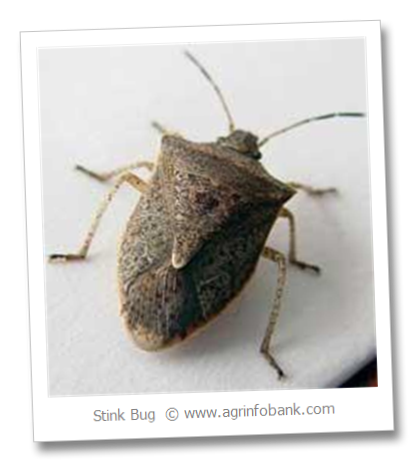
Currently, there are few options for homeowners inundated with stinkbugs, other than squishing or trapping the bugs, which aren't poisonous and don't bite, but do give off a cilantro-like smell when frightened.
Weber said through his research he has noticed that the bugs tend to congregate in outer suburbs, such as Carroll County, where there is both abundant vegetation in the form of farmland and woods, as well as nearby housing.
"Inside the beltway, it's spotty," said Weber. "There's not that expansive number of host plants where they can build up their population."
Weber said scientists studying the bugs may have solid population numbers on them by the end of the year. A network of university entomologists in states where the stinkbugs are abundant estimated their population figures in 2012 using traps, but this year will be able to test the accuracy of those numbers with another year of estimates, according to Weber.
"We have an aggregation pheremone that is very effective during the growing season at attracting them," said Weber. "That will give us an idea of their numbers."
But will there be a great insect war between the now-ubiquitous stinkbugs and the emerging cicads?
"There's no interaction between the two," said Weber. "Other than people getting a little tired of both of them."
Source:http://eldersburg.patch.com
The Competitive Edge of Farm Certification
Recently, I participated in the Operations Committee meeting for the Harmonized GAPs standard. As part of the Harmonized G.A.Ps Initiative, the produce industry is identifying the best audit process to efficiently implement and deliver a ready-to-use harmonized checklist. During the meeting, there was discussion of food safety as being non-competitive. Does this also mean that the food safety certification process is non-competitive? Put another way: does non-competitive food safety just preclude using food safety claims as part of marketing, or does it also preclude competition in the audit process used to assess on-farm practices for food safety?

Now, the discussion isn’t about food safety claims, but rather how best to measure food safety performance and ensure the integrity of the audit process for food safety. Over the last decade, ISO-accredited certification has been proven around the world as capable of delivering a rigorous independent assessment rigorousness of food safety management systems. (Food safety can’t be “tested” into a system, it is inherent in the management system itself; Food safety certification assesses this management system.) The competition of service providers for an audit process with a high-level of integrity can improve the audit process, stimulate innovation, and reduce cost. This effectively creates a competitive market for delivery systems for audit processes at an acceptable level. How this market is to be defined – who should play in the market; who should offer the services; who should supervise the market; what the levels of transparency, liability, and accountability are; and how this ultimately builds consumer and public sector trust – is the complex task of the Operations Committee.
This task will be completed successfully when the competitive edge of certification is leveraged for increased efficiency in the market for delivery systems and NOT attributed to claims like “my certification integrity is higher than yours”; Claims like this will ultimately damage the reputation of third party certification as a whole.
Wednesday, April 10, 2013
A sustainability oriented technology and Soil health
Mohsin Tanveer, Shahbaz Atta Tung, Haseeb Zahid
Nature has sanctified us with biological entity and life is not possible without it. And that biological entity is SOIL. Soil is layer of upper earth crust and a source of mineral nutrients, containing a vast array of organic, inorganic nutrients and gases in different proportions. Plant takes up 16 elements from soil and makes its food. Unfortunately, we are not taking care of it and under the scenario of current agriculture problems; soil health is of burning issue right now. Agriculture is modified and transformed into industry and now the only aim of farmer is to get high yield even though he has to deteriorate its soil. Farmers have increased their cropping intensity in greed of more earning without taking into consideration of soil health. As a result, nutrient status of soil is diminishing rapidly day by day.

Although the nutrient requirement could be done with synthetic fertilizer application, but fertilizer prices and their quality is still a question. However, total avoidance of synthetic fertiliser is not possible, so there is need of sustainability oriented approach that reduces artificial fertilizer application and improves soil fitness. The basic concept behind adoption of that technology is just to increase organic matter in soil. Soil fertility depends on the availability of organic matter. This organic matter not only improves water holding capacity, nutrient retention capacity but also enhances microbial activity in soil by providing them food. It is primitive for better productivity that our soil should contain enough nutrients. Plant stores nutrient in grains, leaves, stem and roots. It is rule for successful and progressive farming that, after removing economical part of plant, remaining should be incorporated in soil.
Using combine harvesters, lot of wheat stubbles remained on soil and that is marvellous source of organic matter. Usually farmers burn these stubbles and putting stubbles on fire causes environmental issues and loss of nutrients and sometimes it takes shape of massive accidents. Burning also affects soil microbes and reduces soil health. Burning of stubbles is crime, then why does our farmer do this? The reason is, he does not have any idea how to get rid of that and what to do with that. Department of Agronomy, University of Agriculture Faisalabad has devised a system that not only improves soil health but also provide an additional source of income. Main benefit of this technology is that being leguminous crop and addition of organic matter in soil, fertiliser requirement dips to half amount and by burning, 80% nitrogen, 25% phosphorous and 21 % potassium is lost. On the other hand these nutrients can be returned back by putting them in soil. Dr. Ehsan Ullah and his team introduced three methods:
Sowing of Sesbania in standing wheat: Sesbania is leguminous crop that has potential to produce excess biomass in short time with low input requirement. It has capability to fix nitrogen in soil and increase nitrogen concentration in soil. At the end of March/ start of April and when last irrigation of wheat is done then broadcast sesbania at rate of 10 kg per acre in standing wheat. Soak the seed for 10-15 hours before surface steeping that increase germination speed. Then at harvesting time of Wheat, Sesbania grows up to height of 1 foot and at that time it is not ploughed in soil by using simple cultivator. At this stage, upper grown parts can be harvested and fed to animals as fodder. And below ground parts may be act as organic matter in soil. 2) Sowing of Sesbania after wheat harvesting: Sometimes, farmers do not able to sow seed, might be due to unavailability of seed. Then they can sow seed even after harvesting. Seeds may be sown by giving irrigation heavily after harvesting and broadcast primed seed in field. In this method, Sesbania get little height at time of land preparation for rice. But that little biomass of Sesbania improves sol health a lot.

Questions regarding the adoption of this method:
· Some farmers feel reluctant to spend money on purchasing Sesbania seed. They do not want to increase the expense but they do not know, if they use this technique, they will not only sustain their soil but also get high yield and price of Sesbania seed is very low.
· Some farmers ask how this will increase our yield. The answer is Sesbania is leguminous crop. It will fix environmental nitrogen in soil and boost up the availability of nitrogen in soil. This will reduce fertiliser requirement.
· Some farmers inquired about the feasibility of adoption of this method. This method is feasible under all agro-ecological zones and can be adapted at all kind of soil series.


